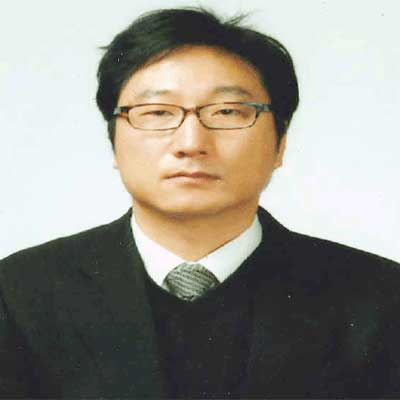
Dr. Chang-Hyun  Song
My Social Links

Dr. Chang-Hyun Song

Assistant Professor
Daegu Haany University, South Korea


Highest Degree
Ph.D. in Neurosciences from Daegu Haany University, South Korea

Share this Profile

Biography

Dr. Chang-Hyun Song is currently working as Assistant Professor Department of Anatomy and Histology of College of Korean Medicine of Daegu Haany University. He has completed his Ph.D. in Neurosciences from same University. His main area of interest related to Neuroscience and Drug discovery development of Oriental Medicine. His area of expertise includes Prion disease, Dystonia, DYT1 Dystonia, Oriental medicine, Stem cell research, Neuropathology, and Veterinary surgery. He has published 16 research articles in journals contributed as author/co-author.

Area of Interest:

Biomedical Sciences
100%
Neuroscience
62%
Drug Discovery
90%
Stem Cell Research
75%
Neuropathology
55%

Research Publications in Numbers

Books
0
Chapters
0
Articles
0
Abstracts
0

Selected Publications

  1. Song, C.H., D. Bernhard, C. Bolarinwa, E.J. Hess and Y. Smith et al, 2013. Subtle microstructural changes of the striatum in a DYT1 knock-in mouse model of dystonia. Neurobiol. Dis., 54: 362-371.
    CrossRef  |  PubMed  |  Direct Link  |  
  2. Park, J.H., B.I. Seo, S.Y. Cho, K.R. Park and S.H. Choi et al., 2013. Single oral dose toxicity study of prebrewed armeniacae semen in rats. Toxicol. Res., 29: 91-98.
    CrossRef  |  Direct Link  |  
  3. Ohsawa, N., C.H. Song, A. Suzuki, H. Furuoka and R. Hasebe et al., 2013. Therapeutic effect of peripheral administration of an anti-prion protein antibody on mice infected with prions. Microbiol. Immunol., 57: 288-297.
    CrossRef  |  PubMed  |  Direct Link  |  
  4. Cho, H.B., J.H. Park, B.I. Seo, S.Y. Cho and K.R. Park et al., 2013. Single oral dose toxicity test of persicae semen aqueous extracts in mice. Korea J. Herbol., 28: 17-24.
    CrossRef  |  Direct Link  |  
  5. Song, C.H., X. Fan, C.J. Exeter, E.J. Hess and H.A. Jinnah, 2012. Functional analysis of dopaminergic systems in a DYT1 knock-in mouse model of dystonia. Neurobiol. Dis., 48: 66-78.
    CrossRef  |  PubMed  |  Direct Link  |  
  6. Song, C., S. Ku, H. Jang, E. Kye and S. Yun et al., 2012. Eyelid squamous cell carcinoma in a dog. Pak. Vet. J., 32: 474-476.
    Direct Link  |  
  7. Song, C.H., O. Honmou, H. Furuoka and M. Horiuchi, 2011. Identification of chemoattractive factors involved in the migration of bone marrow-derived mesenchymal stem cells to brain lesions caused by prions. J. Virol., 85: 11069-11078.
    CrossRef  |  PubMed  |  Direct Link  |  
  8. Song, C.H., O. Honmou, N. Ohsawa, K. Nakamura and H. Hamada et al., 2009. Effect of transplantation of bone marrow-derived mesenchymal stem cells on mice infected with prions. J. Virol., 83: 5918-5927.
    CrossRef  |  PubMed  |  Direct Link  |  
  9. Shindoh, R., C.L. Kim, C.H. Song, R. Hasebe and M. Horiuchi, 2009. The region approximately between amino acids 81 and 137 of proteinase K-resistant PrPSc is critical for the infectivity of the chandler prion strain. J. Virol., 83: 3852-3860.
    CrossRef  |  PubMed  |  Direct Link  |  
  10. Song, C.H., H. Furuoka, C.L. Kim, M. Ogino and A. Suzuki et al., 2008. Effect of intraventricular infusion of anti-prion protein monoclonal antibodies on disease progression in prion-infected mice. J. Gen. Virol., 89: 1533-1544.
    CrossRef  |  PubMed  |  Direct Link  |